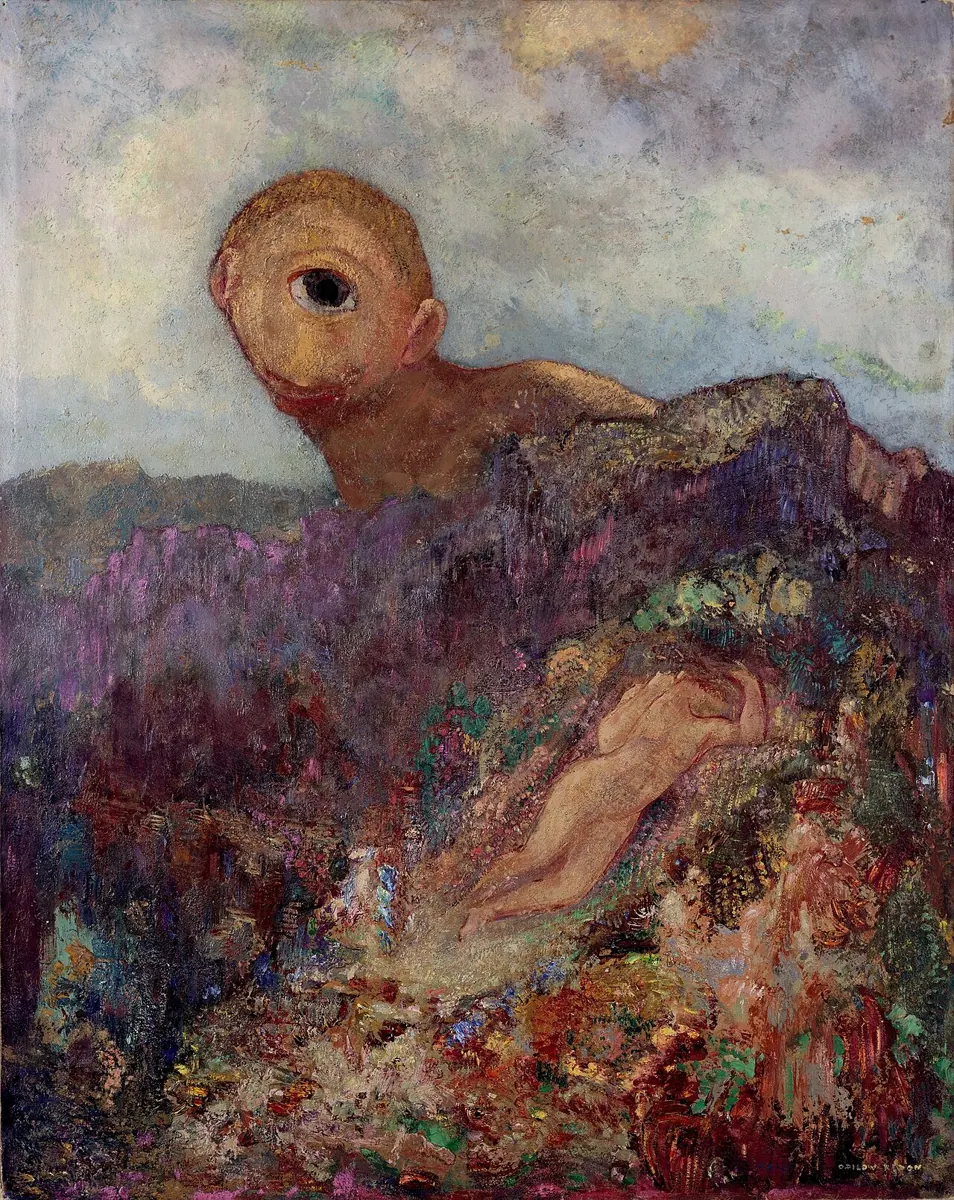
키클롭스는 이마 한가운데에 눈이 하나뿐인 그리스 신화의 거인이다. 이름은 「둥근 눈」이라는 뜻이고, 여럿일 때는 키클로페스라 부른다. 그런데 신화에는 서로 다른 두 갈래의 키클롭스가 있어서, 어느 쪽 이야기인지 먼저 가려야 한다.
첫째 갈래는 헤시오도스가 『신통기』에서 말한 세 형제다. 브론테스(천둥), 스테로페스(번개), 아르게스(섬광) — 하늘 우라노스와 땅 가이아의 아들들로, 힘이 세고 손재주가 뛰어난 대장장이였다. 아버지 우라노스는 이들이 두려워 땅속 깊은 타르타로스에 가두었고, 뒤를 이은 크로노스도 풀어 주지 않았다. 이들을 꺼내 준 것이 제우스다. 티탄 전쟁 때 제우스가 타르타로스에서 풀어 주자 세 형제는 보답으로 무기를 만들었다. 제우스에게는 번개를, 포세이돈에게는 삼지창을, 하데스에게는 쓰면 보이지 않게 되는 투구를. 제우스가 번개의 신이 된 것은 이 대장장이들 덕분이다. 그래서 뒷날 사람들은 시칠리아 에트나산 아래에 그들의 대장간이 있어 산이 불을 뿜는다고 여겼고, 헤파이스토스가 그 대장간의 주인이 되었을 때도 키클로페스가 곁에서 망치를 들었다.
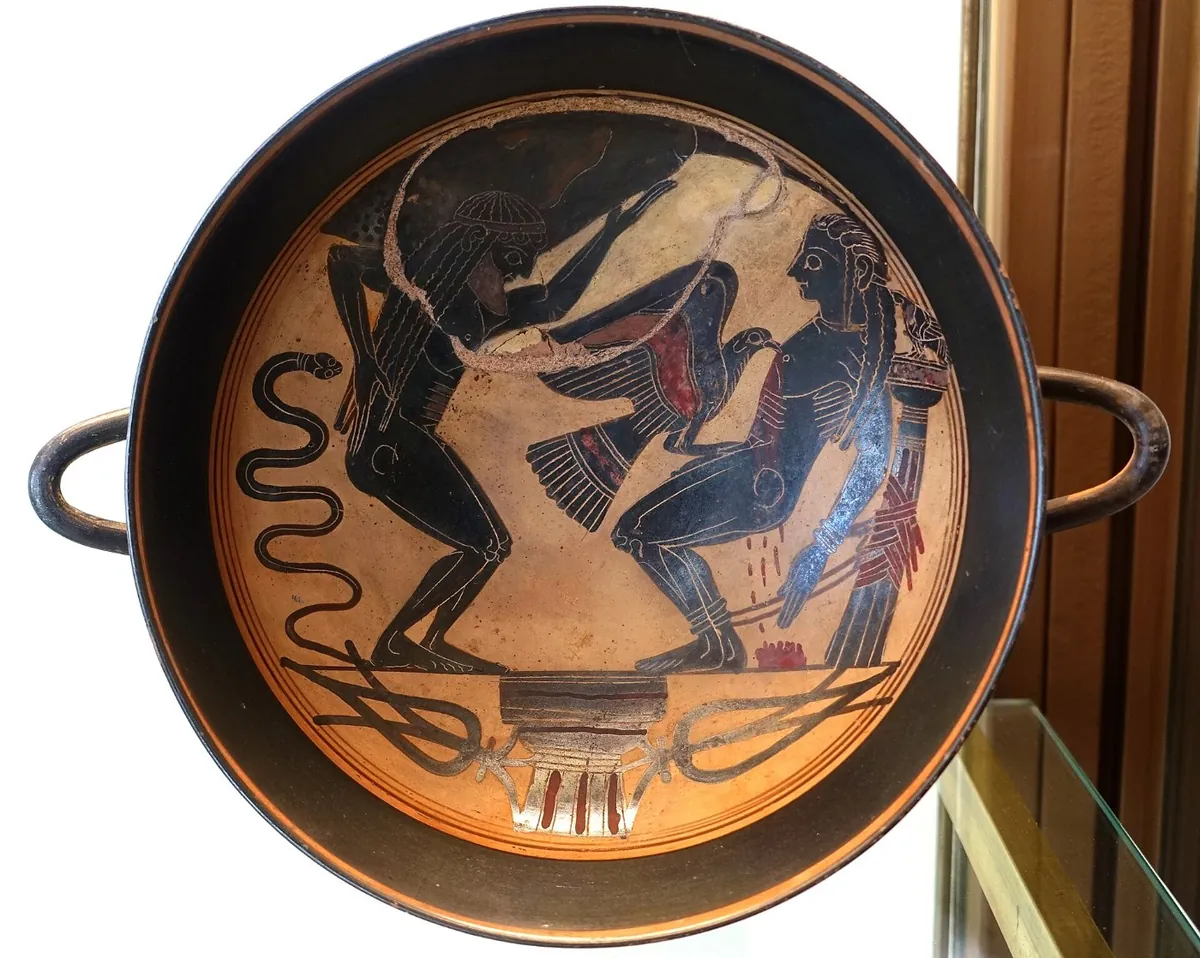
둘째 갈래는 호메로스가 『오디세이아』에서 그린 폴리페모스다. 포세이돈의 아들로, 시칠리아 해안의 동굴에서 양을 치며 사는 거인이다. 이 키클롭스들은 대장장이가 아니라 목동이고, 법도 회의도 없이 저마다 동굴에서 제 식구만 다스린다. 오디세우스 일행이 동굴에 들어갔다가 갇히자 폴리페모스는 손님을 대접하는 대신 둘씩 잡아먹는다. 오디세우스는 「아무도 아니(우티스)」라는 이름을 대고, 포도주로 거인을 잠재운 뒤 달군 말뚝으로 하나뿐인 눈을 찌른다. 폴리페모스가 「아무도 아니가 나를 해쳤다」고 외치자 동료 거인들은 아무도 오지 않는다. 눈을 잃은 폴리페모스는 아버지 포세이돈에게 복수를 빌었고, 그 저주가 오디세우스의 귀향을 십 년이나 늦춘다.
왜 하필 외눈인가. 고대 지중해 사람들이 코끼리 조상(마스토돈)의 머리뼈 화석을 보고 상상했다는 설이 있다. 코가 있던 자리의 큰 구멍이 이마 한가운데 눈구멍처럼 보인다는 것인데, 시칠리아에서 실제로 그런 화석이 나온다. 재미있는 설명이지만 증명된 것은 아니어서, 설로만 알아 두면 된다.
철학아틀라스가 이 거인을 따로 한 편으로 두는 이유는 폴리페모스가 「문명이 아닌 것」의 초상이기 때문이다. 호메로스는 키클롭스들을 두고 밭을 갈지 않고, 배를 만들지 않고, 모여서 의논하지 않으며, 손님을 대접하는 법을 모른다고 적었다. 그리스 사람들에게 문명이란 신전과 성벽이 아니라 법(회의)과 손님 대접(크세니아)이었다. 폴리페모스는 그 둘이 없는 세계이고, 오디세우스는 힘이 아니라 말과 꾀로 그 세계를 빠져나온다. 거인의 눈을 찌른 것이 아니라 이름을 속인 것이 이 이야기의 핵심이다.
주요 이야기
남긴 것
「키클롭스」는 지금도 외눈박이, 또는 둥근 창 하나가 뚫린 것을 가리키는 말로 쓰인다. 큰 돌을 다듬지 않고 쌓은 미케네 시대의 성벽을 「키클롭스 성벽」이라 부르는데, 사람이 아니라 거인이 쌓았다고 믿었기 때문이다. 오디세우스의 「아무도 아니」 이야기는 서양 문학에서 가장 오래된 말장난이자, 힘 앞에서 이름을 숨기는 지혜의 상징으로 남았다. 시칠리아 카타니아 앞바다의 바위섬들은 지금도 눈먼 폴리페모스가 오디세우스의 배를 향해 던진 바위라고 불린다.
A Cyclops is a giant of Greek myth with a single eye in the middle of its forehead. The name means "round-eye"; the plural is Cyclopes. But the myths hold two quite different kinds of Cyclops, and the first thing to do is tell them apart.
The first kind are the three brothers Hesiod describes in the Theogony: Brontes (thunder), Steropes (lightning) and Arges (flash), sons of Uranus the sky and Gaia the earth, immensely strong and skilled smiths. Uranus feared them and shut them away in Tartarus, deep under the earth, and Cronus, who followed him, left them there. It was Zeus who let them out. Freed during the war against the Titans, the brothers repaid him with weapons: the thunderbolt for Zeus, the trident for Poseidon, the helmet of invisibility for Hades. Zeus is the god of lightning because of these smiths. Later tradition placed their forge under Mount Etna in Sicily, which is why the mountain breathes fire, and when Hephaestus became master of that forge the Cyclopes still swung the hammers beside him.
The second kind is Polyphemus, as Homer draws him in Book 9 of the Odyssey: a son of Poseidon who keeps sheep in a cave on the Sicilian coast. These Cyclopes are shepherds, not smiths, and they have no laws and no assemblies; each rules his own household in his own cave. When Odysseus and his men enter the cave and are trapped there, Polyphemus eats them two at a time instead of offering a guest a meal. Odysseus gives his name as "Nobody" (Outis), gets the giant drunk on wine, and drives a sharpened, fire-hardened stake into his one eye. When Polyphemus roars that "Nobody" has hurt him, the other Cyclopes go home. Blinded, he prays to his father for vengeance, and Poseidon's curse delays Odysseus's homecoming by ten years.
Why one eye? One theory holds that people around the ancient Mediterranean found fossil skulls of prehistoric elephants (mastodons), in which the large nasal opening looks like a single eye socket in the middle of the forehead; such fossils really do turn up in Sicily. It is an attractive idea, but unproven, and best kept as a theory.
The Philosophy Atlas gives this giant an entry of his own because Polyphemus is a portrait of what civilisation is not. Homer says of the Cyclopes that they do not plough, do not build ships, do not meet to take counsel, and do not know how to treat a guest. For the Greeks, civilisation was not temples and walls; it was law (the assembly) and hospitality (xenia). Polyphemus is a world without either, and Odysseus escapes it not by strength but by words and wit. The point of the story is not the stake in the eye; it is the false name.
Key stories
What it left behind
"Cyclops" still names anything one-eyed, or anything with a single round window. The huge unworked stone walls of Mycenaean cities are called "Cyclopean" because people believed giants, not men, had built them. The "Nobody" episode is the oldest pun in Western literature and an enduring emblem of hiding one's name in the face of brute force. The rock stacks off Catania in Sicily are still said to be the boulders the blinded Polyphemus hurled after Odysseus's ship.